

Choosing When to Step In
Safety, observation, and trusting young children to find their own solutions

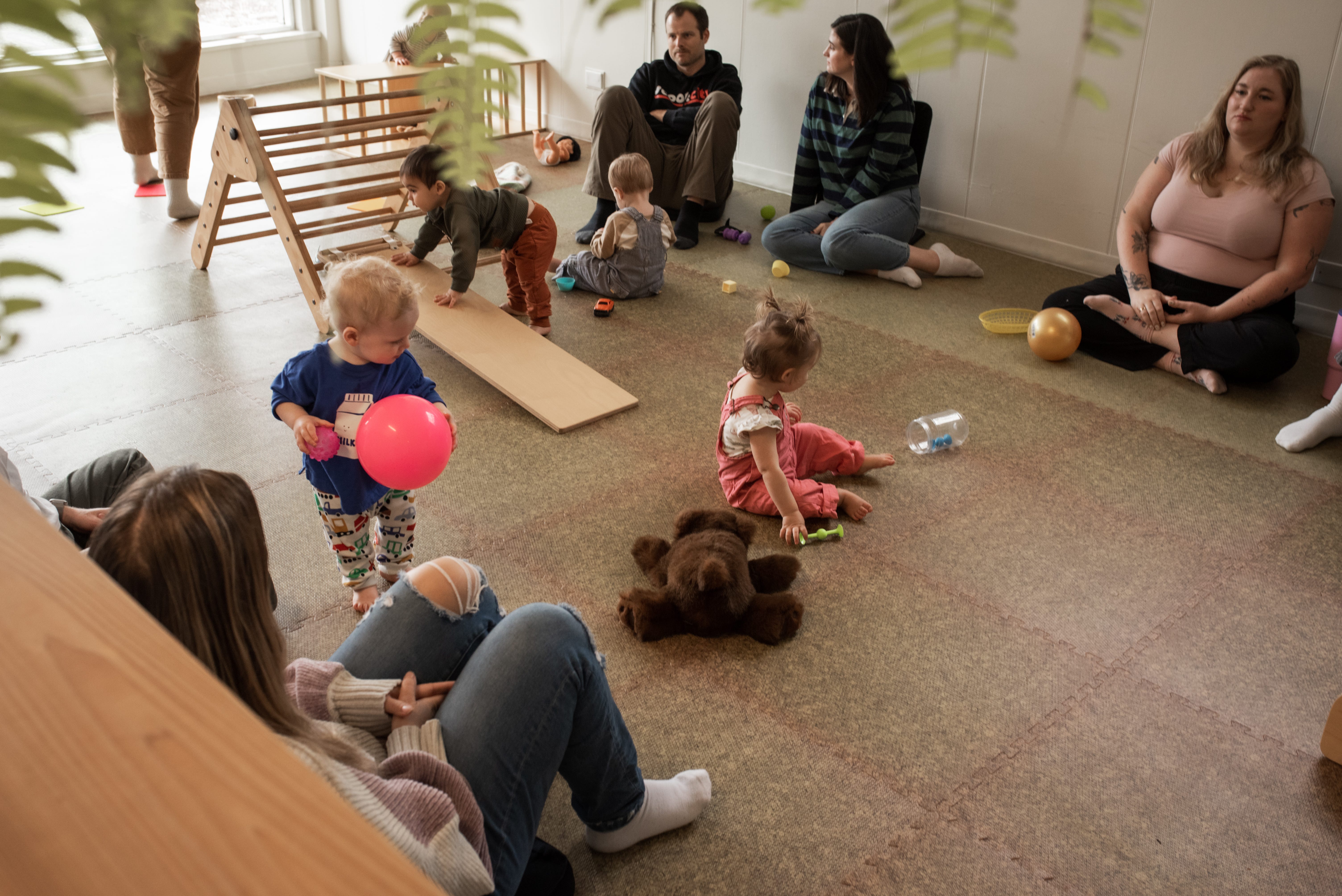
When facilitating one of my parent-child playgroups in Portland, Oregon, I try to cast my attention to the whole room. I’m monitoring physical safety as the babies and toddlers crawl, walk, climb, and run, and watching interactions between children, asking myself Should I step in, or give them space?
Some of these moments can look small, but feel really big to parents: an infant taking a toy from another, two crawling babies converging at the top of the stair climber, a toddler taking space in a way that may feel uncomfortable for adults but isn’t unsafe. For parents, the pressure to intervene can feel high, and part of my role in playgroups is show what it looks like when we give these moments more space.
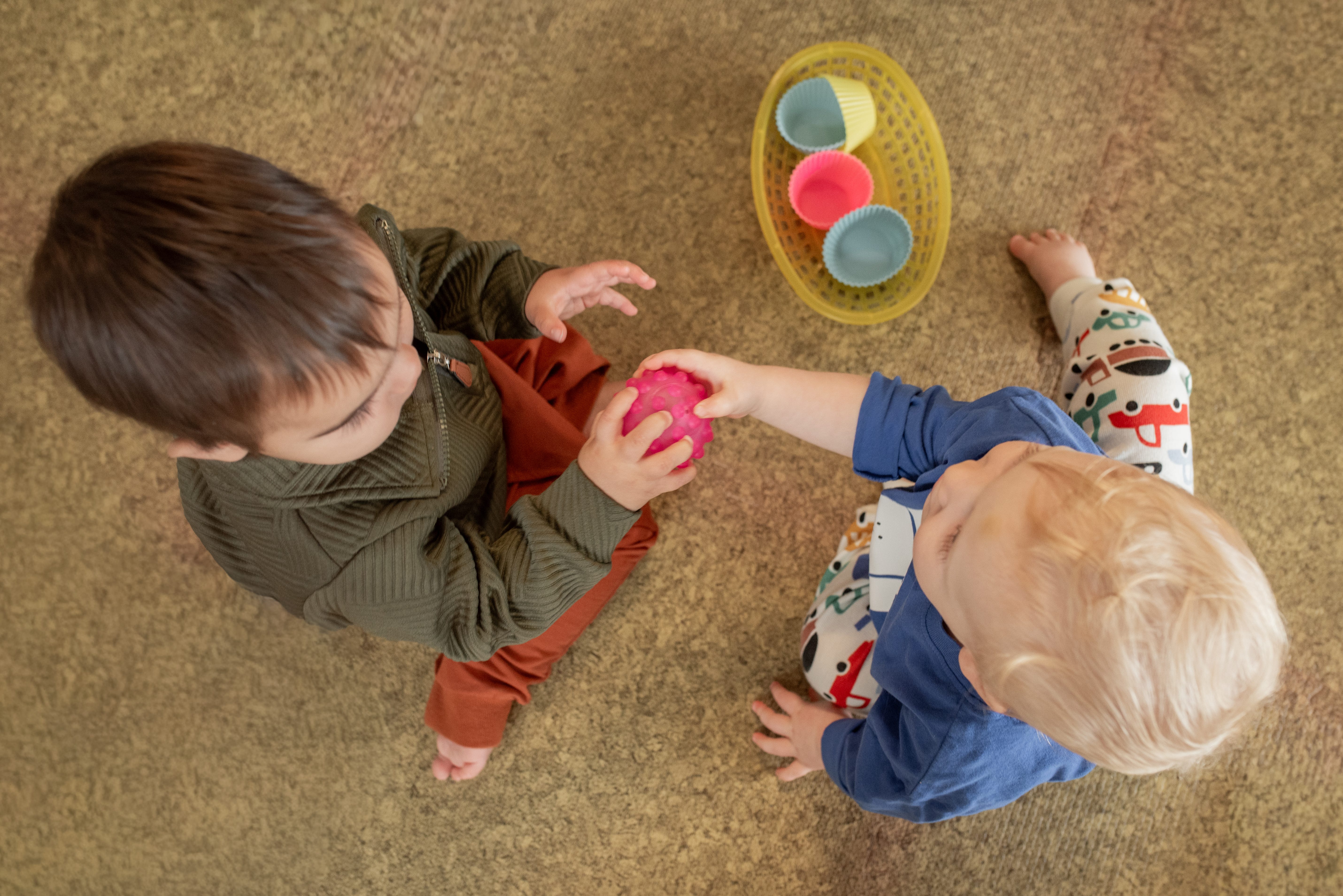
This tension is sometimes framed as either intervening or not intervening, or as strictness versus permissiveness. That framing misses something important, which is that it’s not about either always stepping in or staying out of the situation entirely; it’s about choosing when and how to step in with intention.
My role as a facilitator isn’t passive. I’m watching and assessing. I am responsible for creating a physically and emotionally safe environment with age-appropriate challenges. What I’m not responsible for is solving problems for the children or smoothing every interaction into something comfortable and easy.
Safety first
There are moments when I intervene without hesitation: when bodies are at risk, when I need to step in and block a hit or a push, when a child is clearly overwhelmed. I might slow things down by coming close to the interaction, place my hand on a toy that’s being tugged, or use a phrase like “what’s your plan?” My calm presence is often enough to move an interaction along safely, and if not I use tools like sportscasting (naming what I see in a neutral way), or gently using my hands to stop an action that might hurt another child.
Selective intervention means staying close enough that I can prevent harm, not waiting for something to go wrong before responding. Of course, I don’t catch every single thing before it happens, but that is my goal.
What’s up with toy taking?
Toy taking is one of the clearest examples of where seeing children’s interactions through an adult lens can get in the way. When one baby reaches for a toy that another baby is holding, there’s often an urge to correct or redirect. We may project qualities of selfishness or meanness onto the toy-taker. This is not the harmonious sharing we pictured our sweet baby engaged in!
Babies are not ready to share yet. Toddlers sometimes try out altruistic sharing, but only when given space and time for it to be a choice. First, children need to learn about ownership, explore cause and effect, learn about how their bodies interact with other bodies and what happens when two people want the same thing. They’re deeply engaged in following their own interest, just as a young child should be, and a moving toy is always going to be more interesting than an identical toy just lying there.
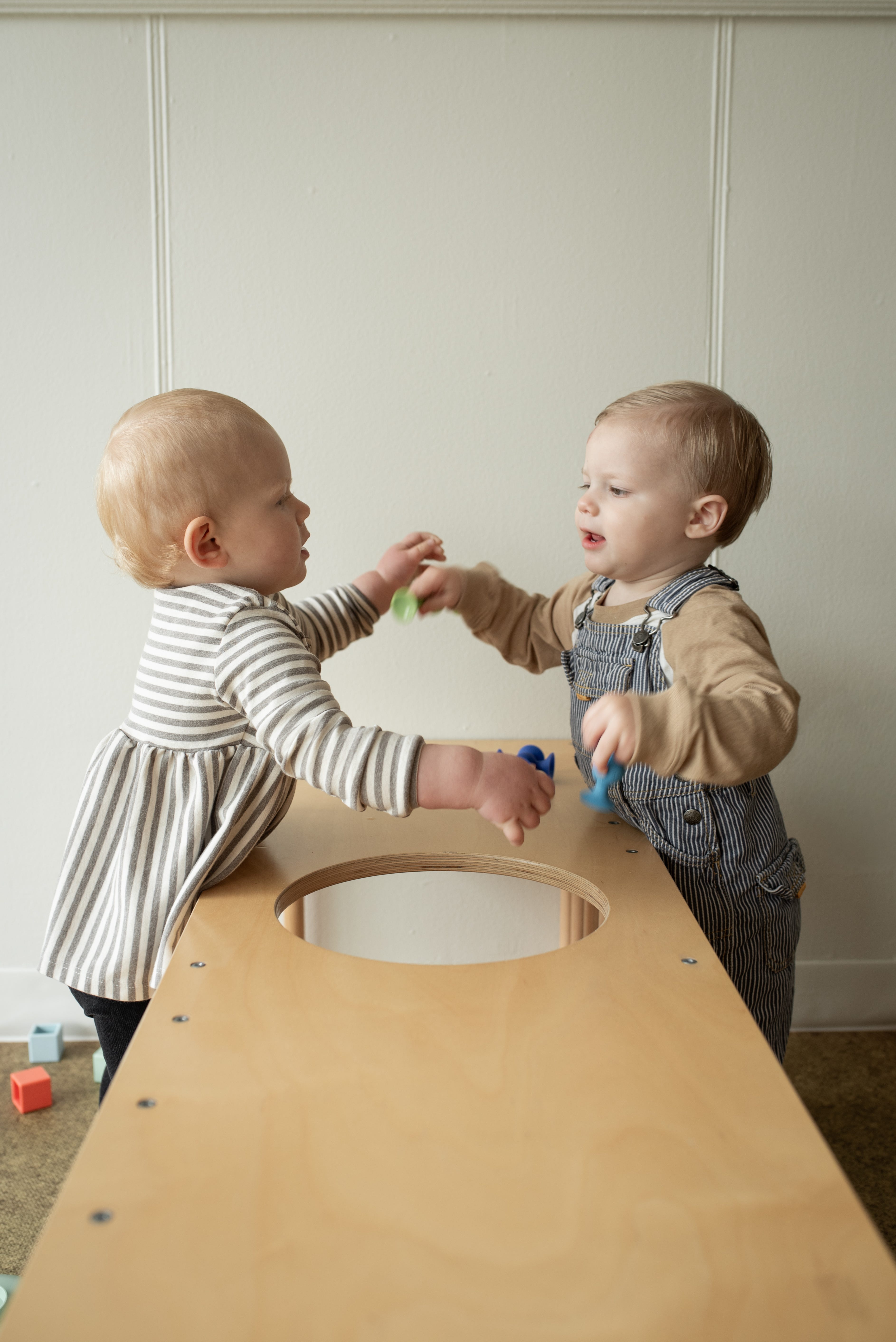
If intervention is needed in these moments, it’s going to be about slowing down the interaction, not moralizing or teaching.
I might say “You’re holding the truck. Sam wants it too.” or “I see June holding on tight. That tells me she’s still using it.” I may gently place my hand on the toy to prevent it from becoming a tug-of-war situation. It’s not my job to say who will end up with the toy; “she had it first” is an adult concept and irrelevant in baby-world. I don’t need to label anyone right or wrong, victim or aggressor. I’m simply narrating what’s going on and making sure everyone stays safe. Over time, these repeated experiences, supported but not directed, help children build awareness of one another and practice problem solving without the weight of adult judgment layered on top.
Navigating shared space
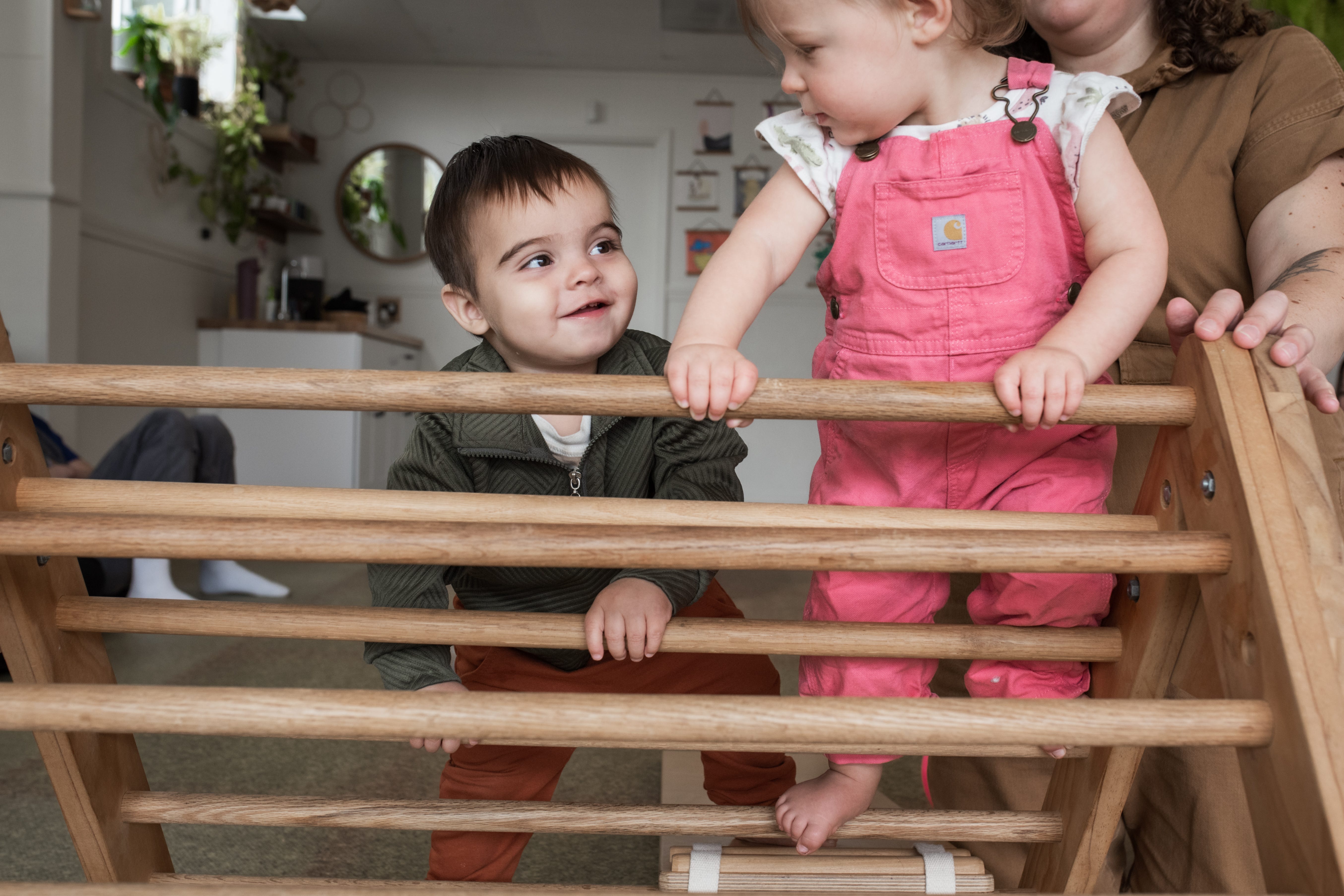
Shared physical space brings up similar moments. In toddler/wobbler/crawler groups I tend to have two climbers set up, a Pikler triangle with or without a ramp, and a stair climber. When children are navigating climbers, my attention is high. I’m watching for balance, momentum, and vulnerability, spotting where needed without hovering. I’m projecting trust in each child’s competence and knowledge of their own abilities.
While space on our climbers is limited, they often attract two or more children at a time. Still, I try not to direct the play unnecessarily. I don’t rush children through moments of waiting or proximity if everyone is steady and regulated. You might hear me say “I see Julia’s foot is right there.” or ask “Where is there space for your body?”
Once again, often my presence as a calm and available adult is enough support for children to navigate with and around each other. They learn about pacing, practice body awareness, spatial negotiation, and problem-solving simply by being in a shared space with peers.
Toddler social dynamics
Toddler interactions can be especially challenging for adults. As children gain language and gross motor abilities, we see them as big and capable, and it makes it easy to layer our own interpretations onto them. There can also be a fear of judgment from other parents, and sometimes expectations outpace toddler abilities. We may see intention or meanness when toddlers are doing their important work of experimenting with power, proximity, and connection.
Here, selective intervention may be as simple as sportscasting without judgment. “You really want a turn. She’s still using it.” “He let go of the toy. It’s available now.” “You’re noticing Eli’s face. He looks sad.”
I step in to support regulation and prevent harm, not to force resolution or my idea of fairness. I leave room for children to respond to one another, try out different strategies, and discover for themselves what works and what doesn’t in this social context that is still so new. When adults stay out of the role of referee or judge, children often surprise us with creative solutions and their capacity to adapt.
Holding space without taking over
What I notice when I successfully practice selective intervention is that children begin to trust the space, themselves, and each other more. They look to me for safety, but don’t expect me to provide solutions. They stay engaged in problem-solving longer. They practice finding resolutions that belong to them, not to me.
Parents often feel a shift too, when they realize they can let go of pressure to narrate or manage every moment. They can pause and notice all the amazing work their children are doing.
Being selective about when to step in is about choosing interventions that actually support children’s development, and letting go of what only serves our own discomfort. Sometimes our safe, attentive presence and trust in our children’s capacity is the most meaningful thing we can offer.
If you’re curious about practicing this kind of discernment with support, I explore it more deeply in my playgroups and parent coaching work.