

When Parenting Feels Quiet
Stillness, productivity, and learning to trust what we can't see

While parenting young children can certainly have moments that are shockingly loud, sometimes quiet moments can be equally uncomfortable. Your baby is lying on their back, watching light filter in through the window. Your toddler is holding a stuffy, not doing much but also not asking for more. No one is asking for anything and there are no needs to be met, and yet these moments can feel highly stressful to some parents.
Maybe you picture what it would look like if someone could see you just sitting there, not obviously doing anything. You wonder if you should step in, narrate what your child is doing, offer another toy. It feels like you’re wasting time rather than making it count.
Parenting profoundly changes our identity, and one thing I hear over and over from caregivers in my parent-infant playgroups in Portland, Oregon, is how much their pre-parent identity was rooted in productivity. We were raised, and live, in a culture that treats stillness like a vice. When parenting feels quiet, it can feel unsettling, like we’re missing cues and should be doing more.
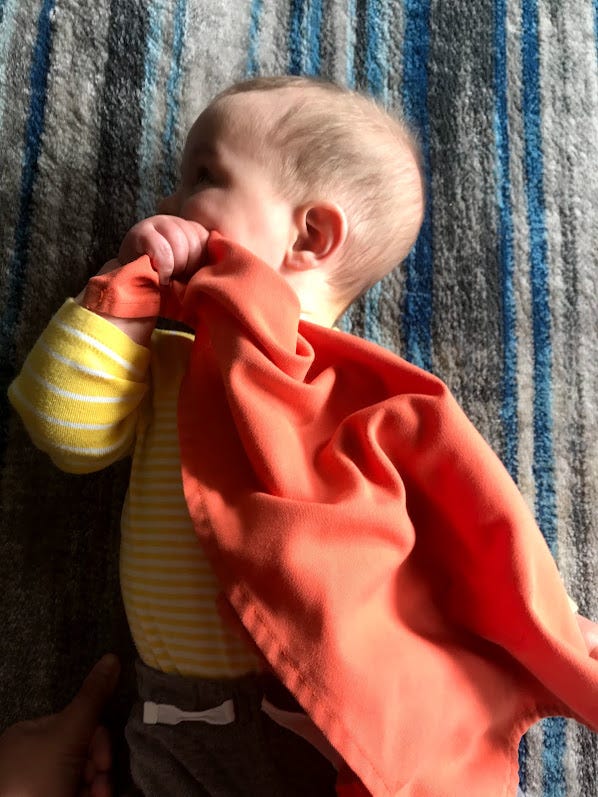
So often with young children, though, quiet isn’t an absence; it’s a space where a lot is happening, even if it isn’t visually apparent.
In quiet moments, we have to work harder to interpret the feedback we’re getting. There may be no visible outcome. These moments lack the reassurance of a solved problem or a smiling baby’s reaction to something we did.
Many of us learned that good caregiving (which has often meant good mothering) is always active. It’s engaging, entertaining, teaching, narrating, fixing, redirecting, not to mention cooking, cleaning, folding laundry, grocery shopping, and probably smiling. When we’re not actively, externally working and producing, there’s a cultural narrative of laziness, a pressure to optimize every moment.

The next time you feel that pressure that you aren’t doing enough with your baby, you could treat it as an invitation to practice what RIE®️ practitioners call sensitive observation. Spending time with a child whose basic needs are all met, who isn’t actively asking for our involvement in their play, is an opportunity to learn about your child: their rhythms, their interests, their way of being in the world.
“Do less, observe more, enjoy most.”
- Magda Gerber
Observing their play without inserting your actions and words also shows your child that you deeply trust their process and value their experience, perspective, and interests. It shows that you trust your relationship and that your child knows you’ll be there when they need you. Giving your child warm, focused attention without expectations that they do anything in particular is such a gift.
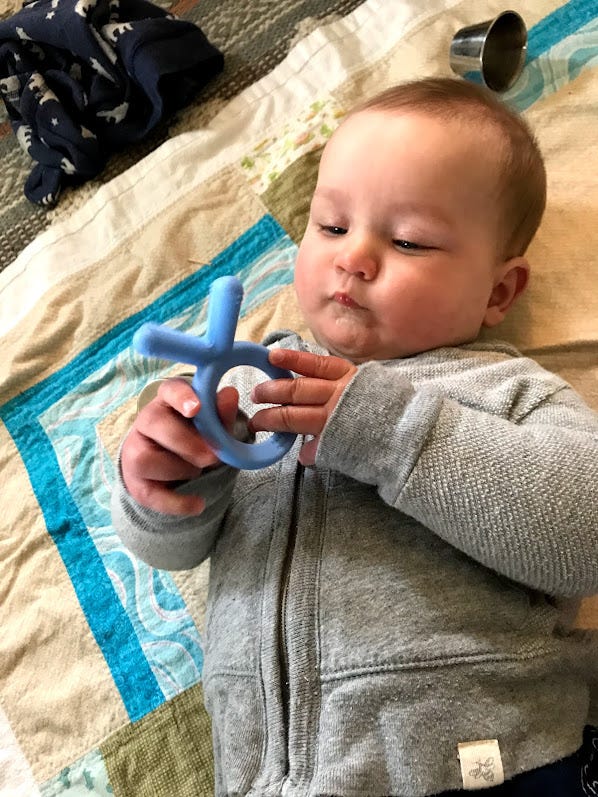
Letting yourself trust moments of stillness is also a gift to yourself as a parent. We know that parents are exhausted and burnt out, and yes, that is due to systemic issues that can only be addressed through systemic change. But maybe we can take the pressure off of ourselves to make every moment “count” or look good from the outside and model to our children, the next generation, that the worth of a moment, or a person, is not determined through their productivity.
When parenting feels quiet, it’s okay to let the moment linger. You don’t need to fill the space, narrate the experience, or make something happen. Sometimes the most supportive thing we can do is stay close, stay curious, and allow ourselves and our children to be exactly where we are.